Child Psychiatry: Illustrated Guide Medical Students Psych Rotation Peds Rotation Residents
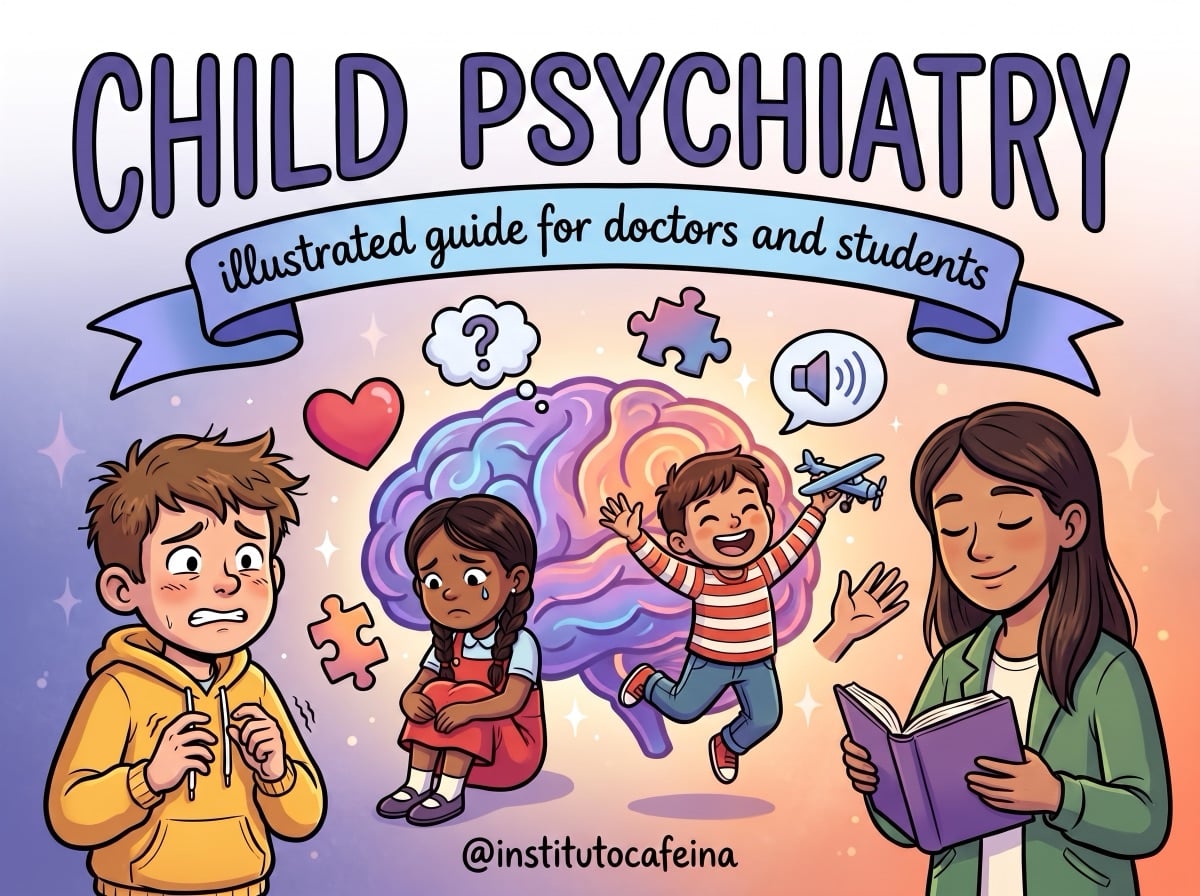
40 disorders in child and adolescent psychiatry, one page each. The criteria, how to tell it apart from what it gets confused with, and the treatment, side by side.
Take a look inside
Real pages from the guide.
Child psychiatry does not fit in a paragraph.
Check the ones you have already lived through:
- Mixed up ODD, conduct disorder and a normal tantrum on a case
- Could not tell disruptive mood dysregulation from pediatric bipolar disorder
- Forgot to screen for suicide because the visit was about something else
- Confused separation anxiety, social anxiety and selective mutism
- Did not know what to do when a child described being hurt at home
- Walked into the exam knowing the names but not how to tell them apart
This guide is for you.
Every disorder as a page, not a chapter
Stop rereading and start seeing how it connects. One page, one disorder, and it stays with you.
The 40 topics inside the guide
Click any section to see what it covers.
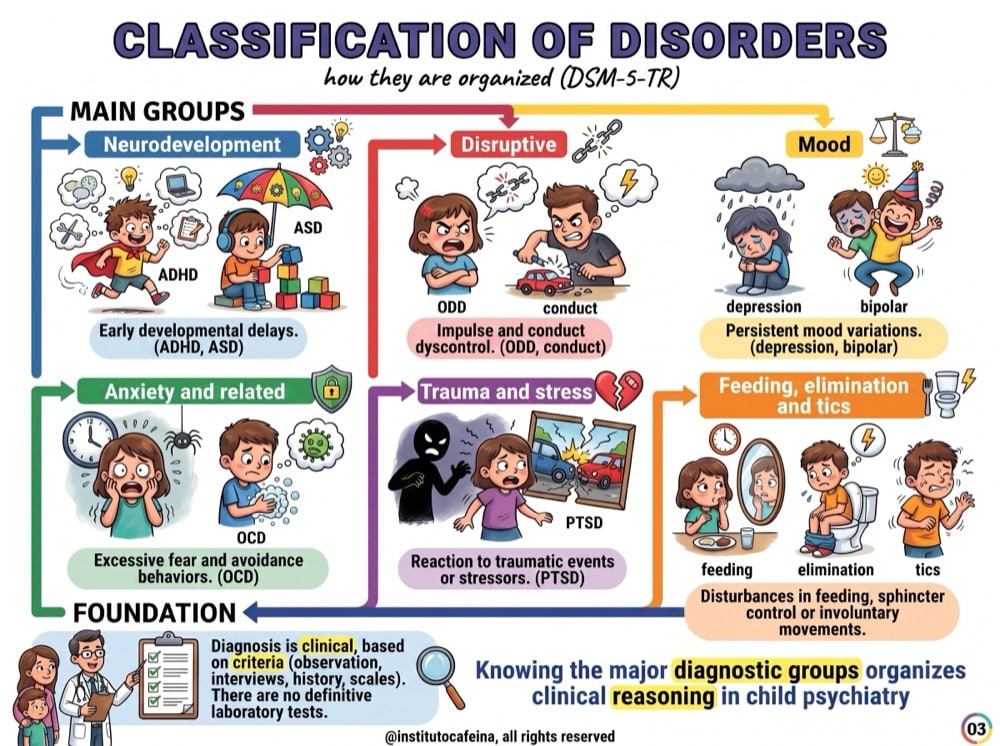
Introduction to child psychiatry, the psychiatric assessment in a child who is rarely the one reporting the problem, how DSM-5 classifies the disorders, pediatric psychopharmacology and the evidence-based psychotherapies used in childhood.
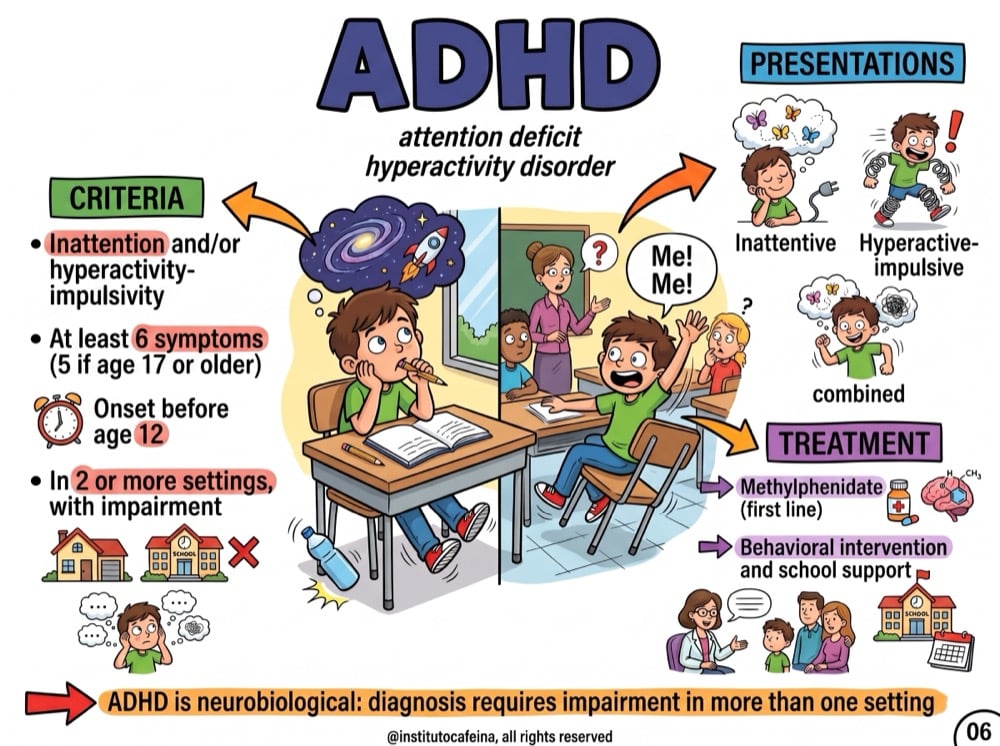
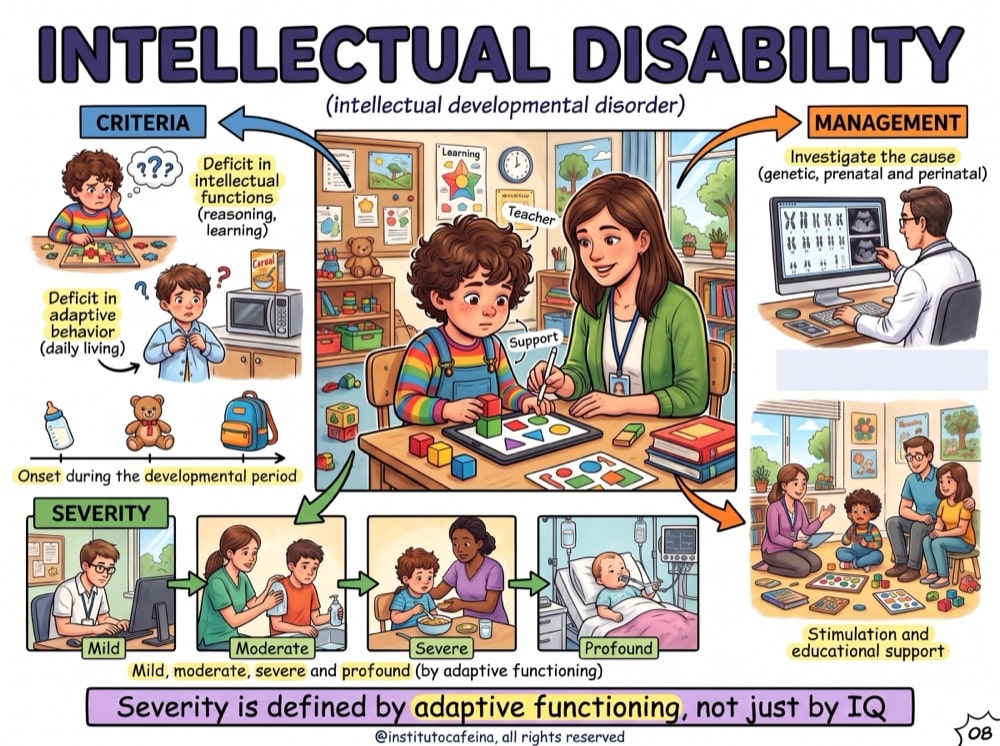
ADHD in its three presentations, autism spectrum disorder with the diagnostic dyad and the three support levels, intellectual disability defined by adaptive functioning rather than IQ alone, and the three learning disorders: dyslexia, dyscalculia and dysgraphia.
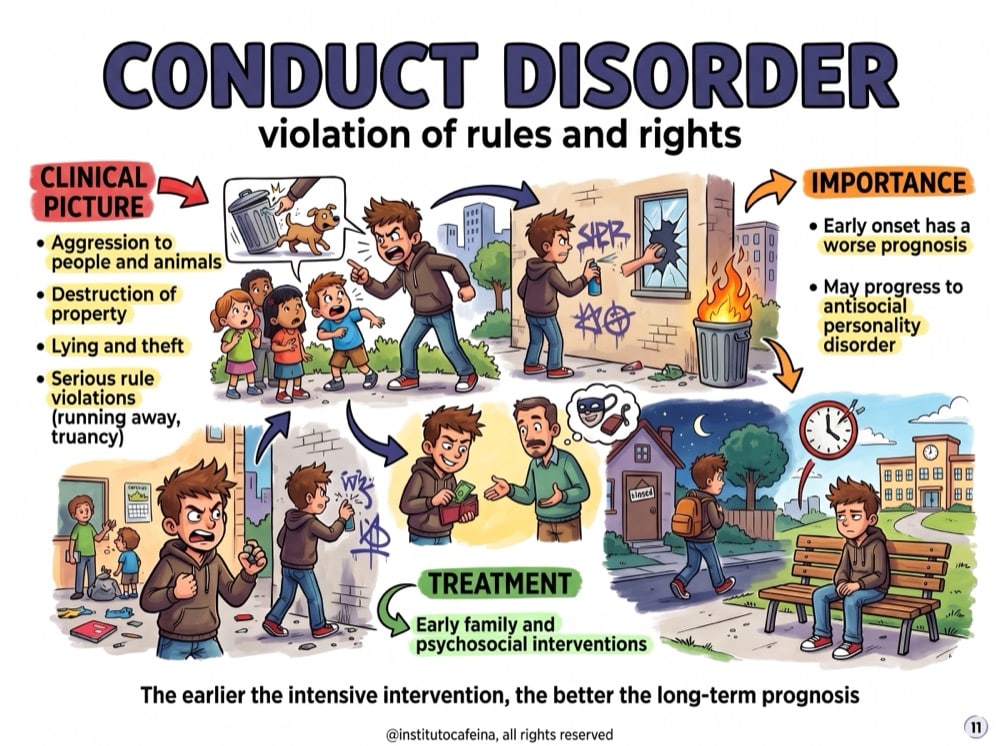
Oppositional defiant disorder and conduct disorder with the boundary between defiance and a serious violation of rights, disruptive mood dysregulation disorder against pediatric bipolar disorder, and intermittent explosive disorder.
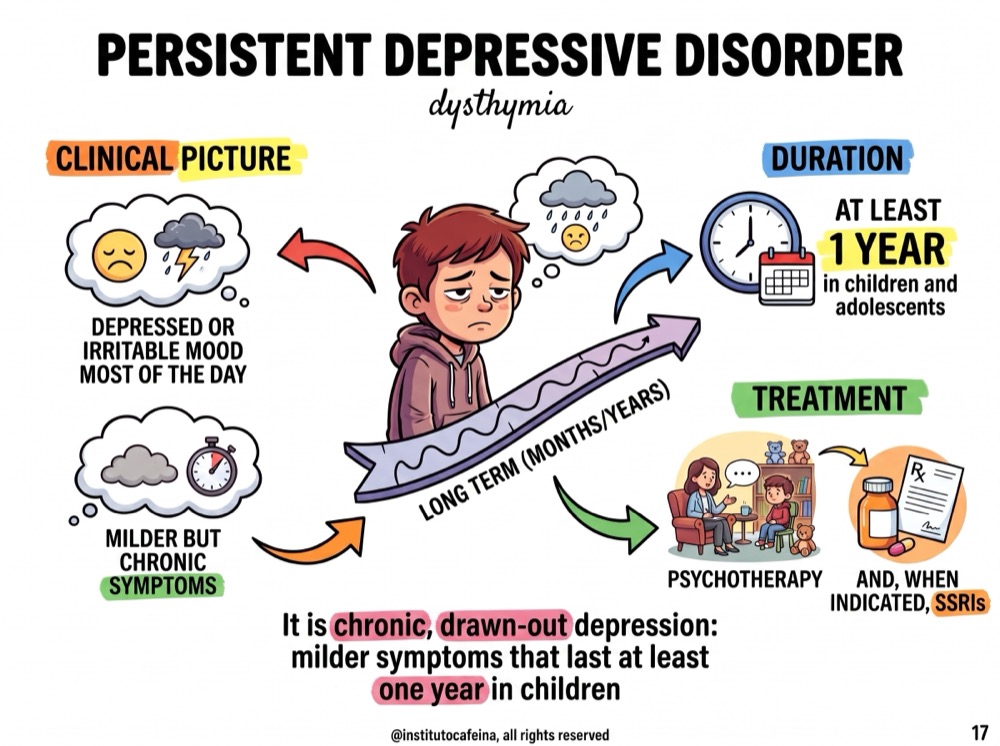
Childhood depression with mandatory suicide screening, pediatric bipolar disorder with its mood chart, persistent depressive disorder, and a full page on suicide and self-harm risk assessment and management.
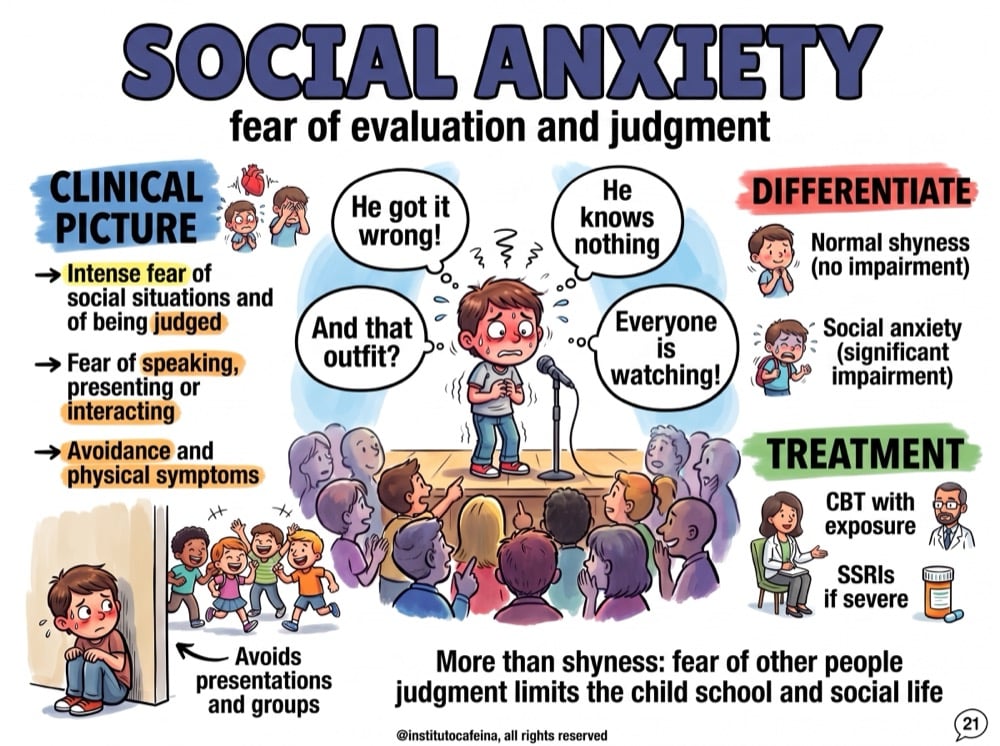
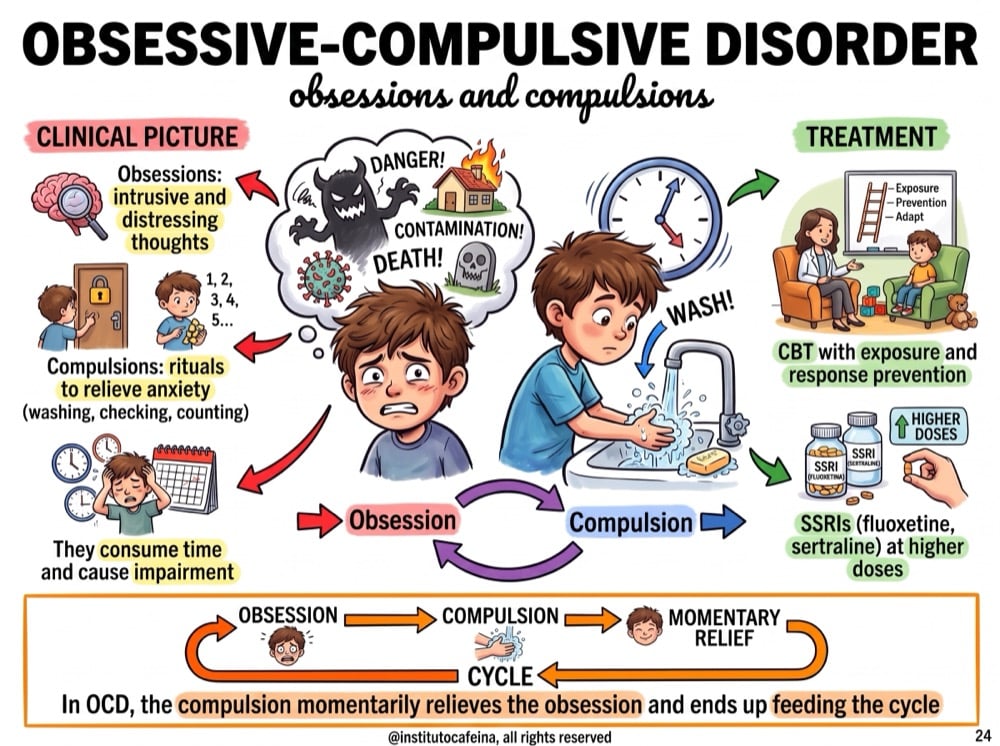
Separation anxiety, generalized anxiety, specific phobia, social anxiety, panic disorder, selective mutism explained as an anxiety response rather than stubbornness, and obsessive-compulsive disorder with the cycle that feeds itself.
PTSD in childhood and how trauma shows up in play before it shows up in words, attachment disorders split into reactive attachment and social disinhibition, and maltreatment and abuse with the types, warning signs and reporting duty.
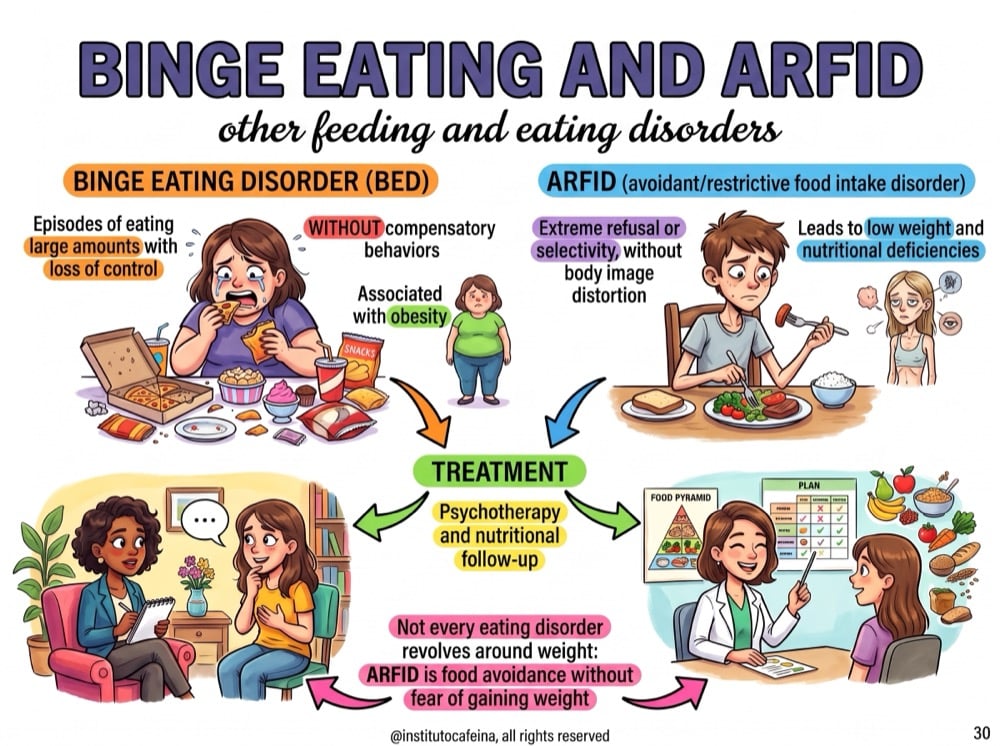
Anorexia nervosa with its medical complications and refeeding syndrome, bulimia nervosa, binge eating disorder and ARFID as two different problems that both get missed, and enuresis and encopresis.
Sleep disorders and parasomnias, tics and Tourette syndrome, early-onset psychosis and schizophrenia, trichotillomania and excoriation, substance use in adolescence, school refusal separated from truancy, bullying and grief in childhood.
Get your Child Psychiatry visual guide
- Immediate access to the guide
- High-resolution PDF in landscape format
- Read on a screen or print large
- Lifetime access to the content
- All 40 topics across 44 pages
- DSM-5 referenced throughout
- 7-day guarantee

7-day guarantee
If within 7 days you feel the guide did not help you, we refund 100% of your investment. No questions asked.
Get the visual guideFrequently asked questions
Medical students, residents in psychiatry or pediatrics, and anyone on a child and adolescent psychiatry rotation who wants the whole disorder in one view instead of forty pages of prose.
Because each disorder needs the clinical picture, the differentiation from what it gets confused with, and the treatment side by side. A wide page lets you see the whole picture at once.
As soon as your payment is confirmed, the download link is sent to your email. It is a high-resolution PDF you can read on a screen or print large.
It is built to make the differences visible and to revise fast, so it works alongside your course material rather than instead of it.
The digital edition is yours for life. Download it once and use it whenever you need.
You have 7 days after purchase to review the material. If it is not for you, we refund 100% of what you paid, no questions asked.